
 Español




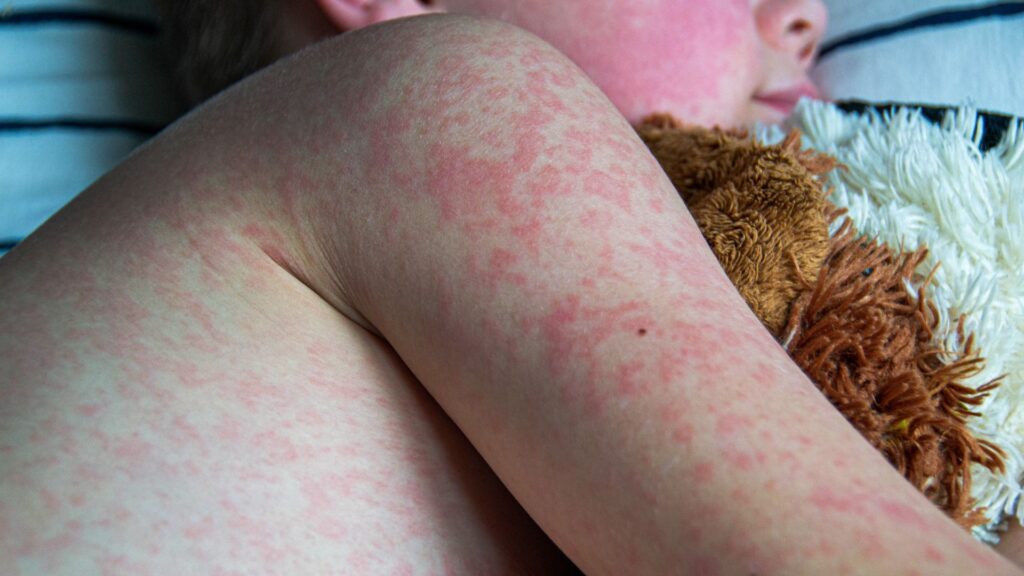
Measles is back on the Spanish public health agenda. And not because it is an unknown disease, but quite the opposite: because for years it had been kept under control thanks to vaccination and epidemiological surveillance systems.
In January 2026, the Ministry of Health announced that Spain would strengthen its national strategy to re-establish the elimination of measles, after the World Health Organisation had determined that endemic transmission had resumed in the country.
According to data released by the Department of Health, in 2024 there were 227 confirmed cases and in 2025 the figure rose to 397. The report also notes that a significant proportion of the cases involved unvaccinated individuals, along with others linked to imported cases.
The nuance is important. It is not simply a matter of counting cases, but of understanding how the disease behaves. According to WHO criteria, transmission is considered endemic when a single chain of transmission persists for a period of twelve months or more. That is the point that has led to a review of the situation in Spain.
Measles is a highly contagious disease. Controlling it requires high vaccination coverage and a surveillance system capable of detecting cases, tracing contacts and breaking potential chains of transmission. When vaccination coverage drops, even if only in specific groups, the virus has more scope to spread.
Nor can the situation be viewed in isolation. The Department of Health has noted that during 2023 and 2024, an increase in measles cases and outbreaks was identified globally and also in Europe, a trend that continued into 2025 and the early months of 2026. In a context of international travel, imported cases may occur. The difference lies in the capacity of each health system to prevent them from leading to sustained transmission.
This news once again brings to the fore an issue that is sometimes taken for granted: achievements in public health require continuity. Vaccination has made it possible to significantly reduce the impact of diseases that were once a part of everyday life. But that success can create a false sense of security. When a disease is no longer seen, the perception of risk can also diminish.
The message should therefore not be based on scaremongering, but on prevention. Stepping up surveillance, reviewing vaccination coverage, improving information and maintaining close coordination between authorities are key to regaining measles elimination status.
Vaccination also has a collective dimension. It protects those who are vaccinated and helps to protect those who cannot be vaccinated or who are particularly vulnerable. This idea, which is well known but sometimes forgotten, takes on renewed importance when diseases that seemed to have been brought under control resurface.
The measles outbreak serves as a reminder that public health cannot function in isolation. It requires data, monitoring, trust, professionals, communication and policies that are sustained over time.
Spain had already made significant progress in tackling this disease. The challenge now is to regain that ground and prevent a one-off alert becomes a major problem.
Sources
Ministerio de Sanidad — Sanidad va a reforzar la estrategia nacional para recuperar la eliminación del sarampión en España:
https://www.sanidad.gob.es/en/gabinete/notasPrensa.do?id=6834
Ministerio de Sanidad — Informe de situación: sarampión en España, 27 de enero de 2026:
https://www.sanidad.gob.es/va/areas/alertasEmergenciasSanitarias/alertasActuales/sarampionyrubeola/docs/20260127_Informe_situacion_Sarampion.pdf
Ministry of Health — Rapid risk assessment of. Increase in cases and outbreaks of measles at global level, in Europe and in Spain, 6 April 2026:
https://www.sanidad.gob.es/areas/alertasEmergenciasSanitarias/alertasActuales/sarampionyrubeola/docs/20260406_Sarampion_ERR_v2.pdf